
By Claire Keegan.
Every now and then, you read a book that sticks with you. It’s easy to get sucked into big, epic stories and rave about them to your friends afterwards, but for me, it’s often the quiet stories that tell me something I didn’t expect I needed to hear. How do you begin to explain the appeal to someone who hasn’t read it yet? How do you convey the subtleties that made you fall in love with it?
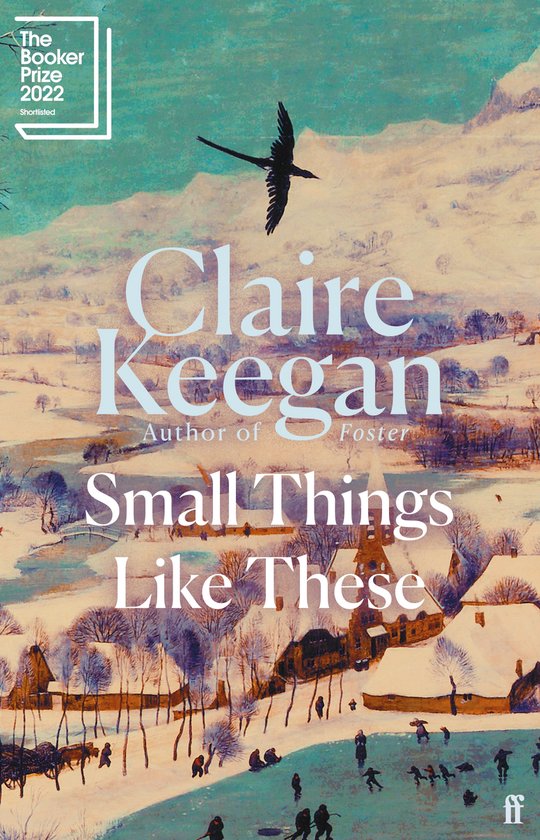
Small Things Like These (2021) is a novella by Irish author Claire Keegan. Even though it covers only 116 pages, it still manages to pack a punch. It was generally well-received by critics and received nominations for a number of literary awards.
The book deals with the phenomenon of mother and baby homes and Magdalene laundries in Ireland. These institutions were run by the Catholic church, silently supported by the state, and homed young women who had fallen pregnant or were otherwise considered to fall outside of the social norm. In the laundries, they were forced to carry out excruciating amounts of labour and were treated brutally.
In Small Things Like These we follow Bill Furlong, a coal and fuel salesman who is forced to deal with his past and the out-of-bounds power of the church within his community, as he is confronted with the silent horrors of the local “training school for girls”. Being a child of an unmarried teenager and having five girls of his own, he starts to question his compliance as well as that of the community.
The story, as you would expect, dives deeply into the omnipresent influence of religion on society and daily life in 1980’s Ireland. The only good school for girls is run by the same convent that runs the laundry, separated by a single wall. Workers stop for lunch as the church bells ring, and most of social life is tied to the church in one way or another. Keegan uses strong visual descriptions and symbols to reiterate the imposing nature of the institution, as well as having it subtly or bluntly stated by several characters throughout the book.
The most obvious theme, then, is compliance. Make your life easier by looking away and remain on good terms with the church, or go against everything you know and refuse to play along. This would, of course, mean almost imminent ostracization from the community. Status and reputation are everything, as Furlong found out quick enough growing up.
Keegan brings us along with Furlong as he straddles the two options. She makes us understand his deliberations through reflections on his past and present, as well as his conversations with his wife, Eileen. Eileen serves as the voice for another theme that comes forward throughout the book: class and privilege. Eileen considers her husband privileged because he did not have to grow up in poverty. After his mother’s family cut all ties following her pregnancy, she and Bill were taken in by her employer, a wealthy woman called Mrs Wilson. Eileen claims that this ensured he would never have to get into trouble the way kids from families who are less well-off sometimes do. Her tactic is to keep her head down and not get involved in anything that could lead to repercussions, urging Bill to do the same. “Always there’s one that has to pull the short straw”, and she is just making sure it’s not their family.
Furlong is inclined to agree, haunted by his less than desirable start in life that has him afraid of being the outsider once more. At the same time, he feels trapped, working hard every day to get by and never stopping to reflect. He feels that he has no agency over his own life, describing himself as “a man consigned to doorways, for did he not spend the best part of his life standing outside of one or another, waiting for them to be opened.”
So what happens when you can no longer look away? Furlong decides his only choice is to take action, because where would he be if Mrs. Wilson hadn’t done the same? Keegan does a beautiful job of bringing her main character to life. The way she describes his life as going to work every day and then come home, maybe read some of the news, watch some television, just to start over and do the exact same thing the next day, feels more real then we might care to admit. That’s what most of us do I think. Keegan, through Furlong, shows us what more is possible. Everyone has the potential to do good, and even though it might make our lives easier if we choose to ignore the bad things happening right under our noses, not doing anything leaves us just as vulnerable to having those bad things happen to us one day. As Furlong suggests, the powerful forces we are scared of upsetting are only as powerful as we collectively make them.
Small Things Like These is a moving story that thrives in its simplicity. This simplicity makes it easy to relate the story to our own life and experiences. It succeeds in urging the reader to reflect without at any point talking down to them or becoming preachy. I will recommend this book to anyone I know and any random person on the streets that will listen to me. I already know I will take this book of the shelves several more times in the future.
 Reading, Into It